
September 17, 2026
Walk Lancaster Avenue on a Saturday morning right now and the parking lot at Suburban Square is harder to get into than it's been in years. That's the visible part. The less visible part is what's actually filling those spaces: a leasing wave that, as of a May 2026 report in the Philadelphia Business Journal, brought the shopping center to full occupancy for the first time in recent memory. Thirteen new tenants signed on in a matter of months.
Here's the part that changes how you should read that number. Almost none of those thirteen tenants started here. Suburban Square didn't grow a new generation of Ardmore businesses. It became the place where outside retail and restaurant capital decided to make its first Philadelphia-suburban move, arriving at almost the exact moment the neighborhood's own signature brewery quietly shrank its footprint two blocks away. Full occupancy and local ownership are not the same story, and this fall they're pulling in opposite directions.
The leasing surge tracks directly to Coulter Place, the 131-unit residential building that added 20,000 square feet of retail space to the property. Suburban Square was already anchored by Apple, Trader Joe's, and Life Time, brands that have been fixtures long enough to feel like part of the architecture. Coulter Place is a different animal. It's the reason Barry's, On Running, and Boll & Branch are opening their first Philadelphia-suburban locations here, while Patagonia, New Balance, and Arhaus are using Ardmore to expand a regional footprint they already had elsewhere.
| Signed On at Suburban Square | What This Location Represents |
|---|---|
| Barry's | First Philadelphia-suburban location |
| On Running | First Philadelphia-suburban location |
| Boll & Branch | First Philadelphia-suburban location |
| Patagonia | Expansion of existing regional presence |
| New Balance | Expansion of existing regional presence |
| Arhaus | Expansion of existing regional presence |
That split matters if you live here. A brand opening its first suburban Philadelphia store isn't testing Ardmore because it stumbled onto the neighborhood. It's testing Ardmore because the Main Line's income profile and Suburban Square's existing foot traffic made this the lowest-risk place to find out whether the concept works outside a city core. Ardmore isn't being discovered. It's being used as a proving ground, and the fact that it keeps passing the test is its own kind of local news.
The restaurant side of the corridor tells a parallel story, just with faster turnover. Gouldsburger's, the South Jersey fast-casual burger and cheesesteak concept that already had locations in Haddonfield, Bordentown, and Medford, opened its Ardmore outpost on February 26, 2026, after delays that pushed the launch back from an original late-2025 target. Bikini Burger, a smash-burger concept, opened at Suburban Square earlier this year. PopUp Bagels, the chain that built a following well beyond its original market, signed on for a Suburban Square location as part of the same 2026 wave.
None of these are bad additions. They're proven, they're popular, and they'll do fine business on a corridor with this much foot traffic. But they're also not Ardmore concepts. They're concepts that worked somewhere else first and picked Ardmore as a next stop, which is a different kind of restaurant scene than one built from scratch by people who live here.
The counterexample is two blocks away, and it's the one place in this whole roundup that was actually invented in Ardmore. Ripplewood opened in April 2018 in the former Fellini Cafe space at 29 East Lancaster, built by a chef with a Stephen Starr and Jose Garces background around a menu that changes with what's available rather than what corporate test kitchens approved. Its partnership with the adjacent Ardmore Music Hall, where the two businesses share foot traffic on concert nights, is the kind of arrangement that only happens when a business is rooted in its specific block, not slotted into a leasing plan.
Here's the detail that should reframe how you think about the neighborhood's momentum. Tired Hands, the craft brewery that earned James Beard nominations and put Ardmore on the map for beer drinkers well outside the Main Line, has been running two locations for years: the original Fermentaria at 35 Cricket Terrace and a second taproom at 16 Ardmore Avenue. That second location rebranded as Ardmore Brewing Company in early 2025, and as of early 2026 it's closed to the public. The Fermentaria remains open and remains the landmark. But the brand that most defines Ardmore's identity to people outside it just got smaller at the exact moment national retail was arriving at full occupancy across the street.
That's not a crisis. It's a contrast worth sitting with. The businesses opening right now are largely imported and expanding. The business contracting right now is the one that grew up here.
Not everything on this corridor is in motion, and the parts holding still are worth knowing about precisely because they're not chasing a leasing cycle. Ardmore Music Hall keeps running its calendar the way it has for years, independent of whatever retail news is happening across the street. The rest of this month alone brings John Craigie and Humbird, Whitney, Tophouse, Damien Jurado with St. Yuma, Pokey LaFarge with Cicada Rhythm, Paul Cauthen, and the Milk Carton Kids through a room that sits close enough to the SEPTA Paoli/Thorndale line that you can walk off the train and into a show.
The Ardmore Initiative, the business improvement district that has organized the neighborhood's Fall for Ardmore festival at Schauffele Plaza every year since its 2022 debut, is doing it again this season. The event has grown each year, adding more downtown businesses to its footprint, but it's still run by the same local nonprofit and still built around the same idea: shopping, food, beer from Tired Hands and other regional breweries, and a kids' zone, all within walking distance of the train station. The Ardmore Business Association's regular Coffee & Conversation meetups, held at Char & Stave on Rittenhouse Place, are the kind of low-key recurring event that never makes a headline but signals a business community that still organizes around itself rather than around whichever chain just signed a lease.
If you've noticed Ardmore feeling busier and slightly less familiar at the same time, this is why. The corridor is genuinely more active than it's been in years, and that activity is real. But it's largely arriving from outside, tested here because Ardmore's foot traffic and income profile make it a safe first move for brands that have already proven themselves somewhere else. The exceptions, Ripplewood, Ardmore Music Hall, the Ardmore Initiative's festival, the Fermentaria, are the parts of the neighborhood that were built here and are still being run by the people who built them.
Knowing the difference matters whether you're deciding where to grab dinner this week or just trying to understand what your own street is turning into. A neighborhood that's attracting first-time entrants from national retail is a neighborhood with strong underlying fundamentals. A neighborhood that's simultaneously watching its own signature business contract is a neighborhood worth watching closely, not worrying about. Both things are true in Ardmore right now, and the corridor is more interesting for it.
If you're weighing what any of this means for your own address on or near Lancaster Avenue, whether that's timing a sale around this kind of commercial momentum or just understanding how it might shape home values over the next few years, Arielle Roemer has been tracking Main Line neighborhoods like this one closely enough to talk specifics. Schedule a consultation when you're ready for that conversation.
Listings
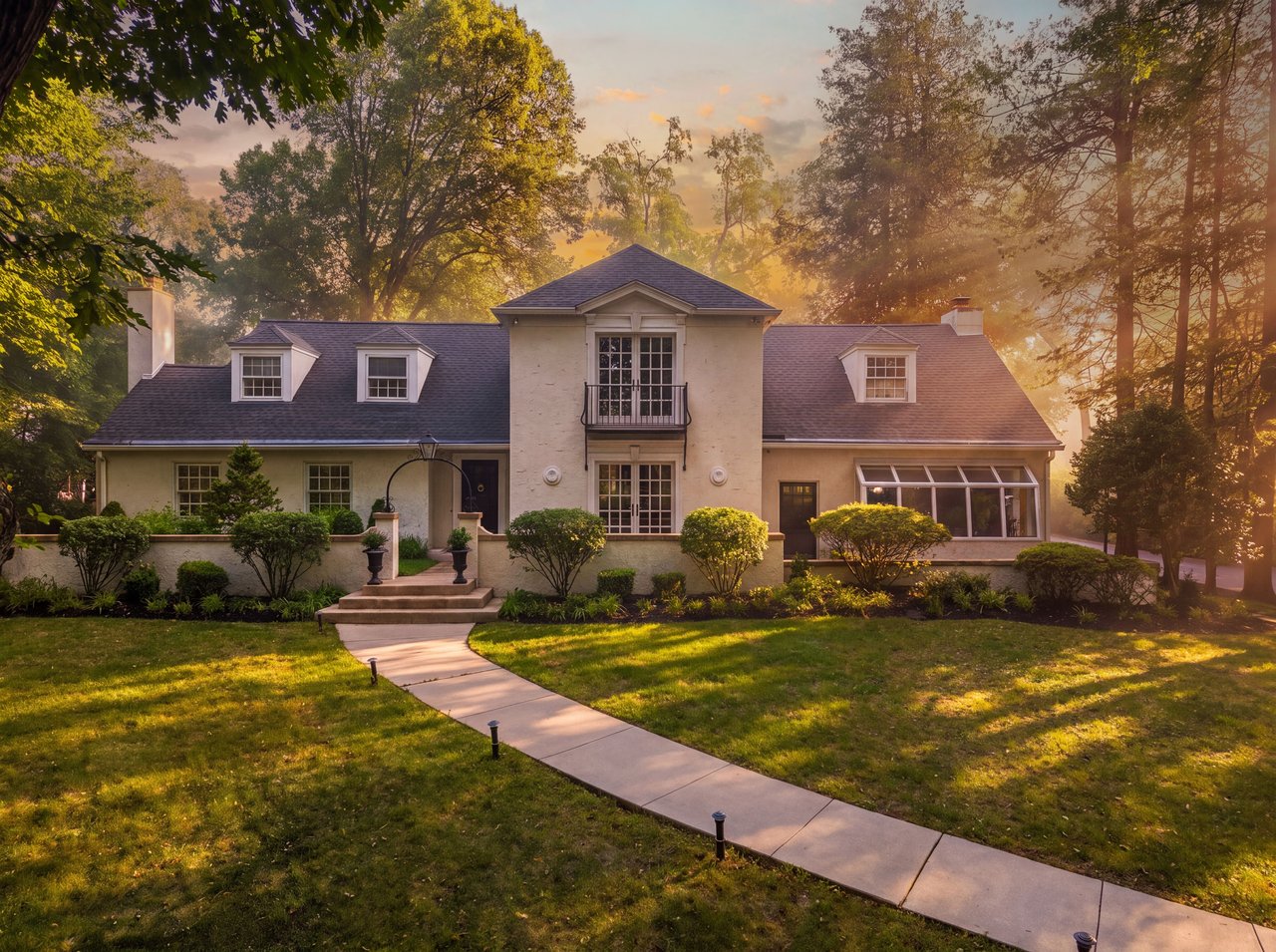
A timeless Penn Valley residence designed to be enjoyed for generations to come.
Listings
Story, Character, Scale & Location
Get assistance in determining current property value, crafting a competitive offer, writing and negotiating a contract, and much more. Contact me today.